
Start here
What is worldschooling? In plain words.
Worldschooling is learning through travel and the real world. Children grow through the places they go and the people they meet, alongside the reading, math, and language that keep their own sequence. If you have never heard the word before, you are in exactly the right place.
It is gentler and more flexible than it sounds. You do not have to be the teacher, and you do not have to travel full-time to begin.
The short answer
Worldschooling is an approach to education in which families use travel and the real world as their children's classroom. Children learn through the places they visit and the people they meet (markets, workshops, farms, museums, languages, and cultures) alongside structured foundations in reading, writing, and math. Families practice it full-time, part-time, or through single trips, and most do it with the support of communities, hubs, and programs rather than alone. It is a way of learning, not a long vacation.
What it actually means
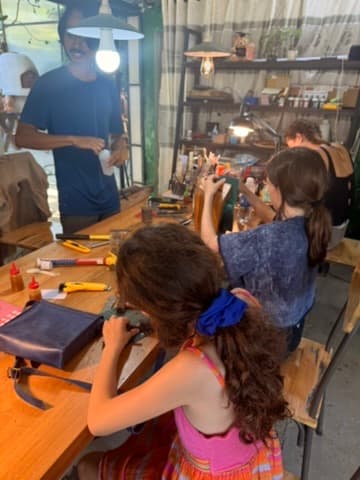
In a worldschooling family, the world is the classroom. A morning at a market becomes math and conversation. A workshop with a local maker becomes a craft and a friendship. A beach, a farm, a museum, a temple: each one a real place to learn something and contribute to it. Structured foundations still have their time. Both modes matter.
It comes in stages. Some families live it full-time. Some travel during school holidays. Some are simply curious and trying it for the first time. All three are worldschooling. You can start small and keep every option open.
It helps to say what it is not, too. Worldschooling is not a long vacation with a nicer name: the learning is intentional, and the foundations keep moving. It is not a rejection of structure: most families protect a daily block for reading and math precisely because travel surrounds it with meaning. And it is not something a family has to do alone: communities, hubs, and programs exist so that nobody does.
What worldschooling looks like day to day
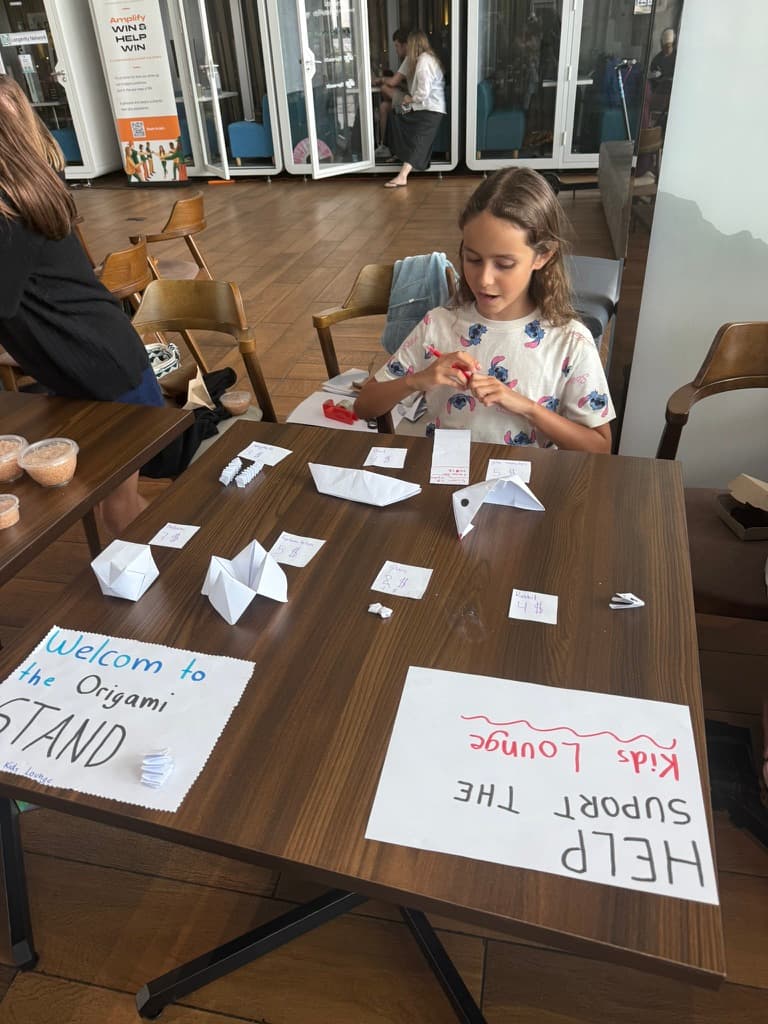
No two worldschooling families run the same day, and that is the point. But most settle into a rhythm that looks surprisingly steady. The learning is woven through ordinary life rather than fenced into a classroom, and the days have a shape children can rely on.
Mornings: foundations
An hour or two of focused work while everyone is fresh: reading, math, writing, a language. Each child keeps their own sequence, at their own pace, wherever the family happens to be. A kitchen table in Hoi An works as well as one at home.
Midday: the world
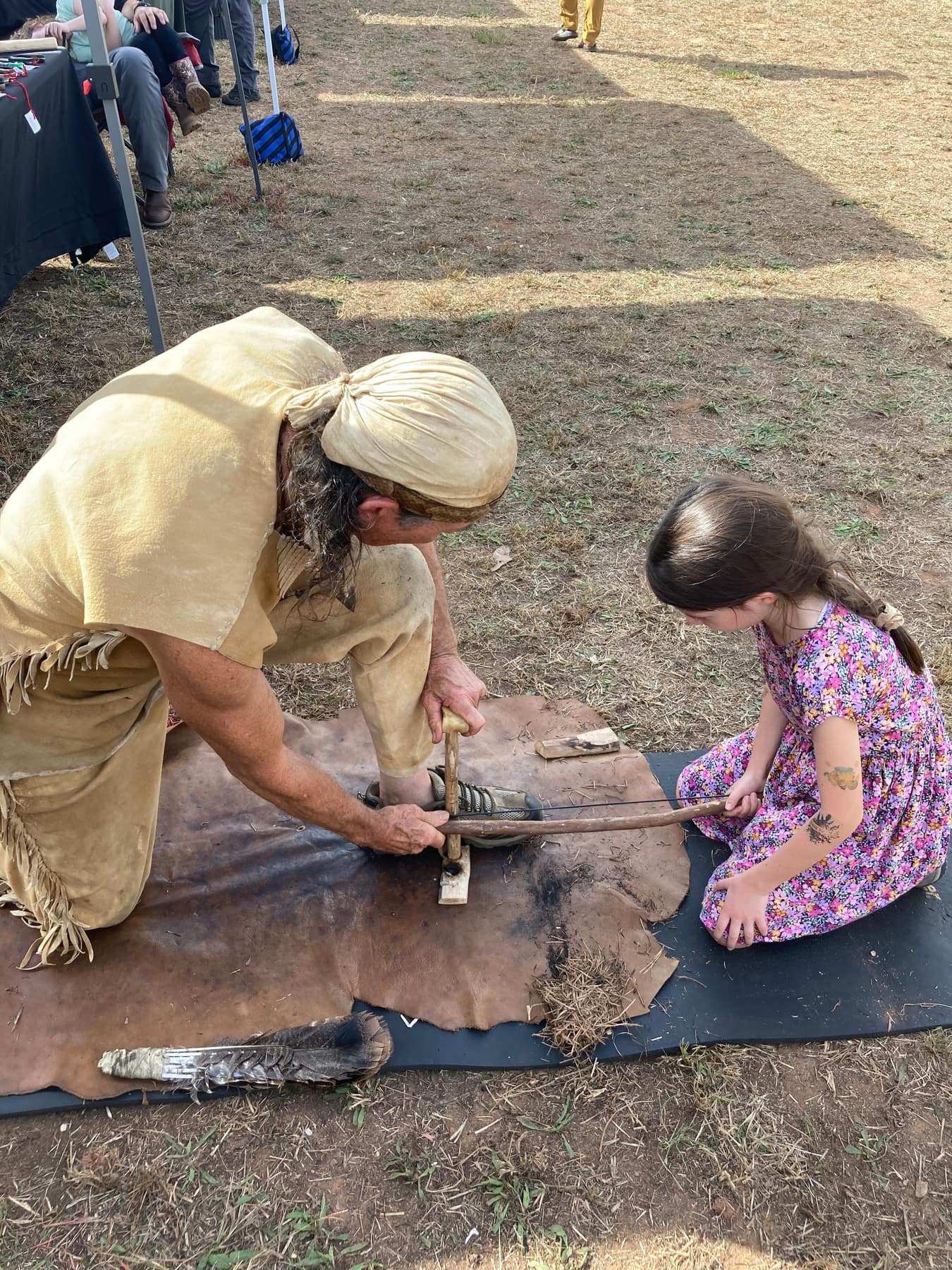
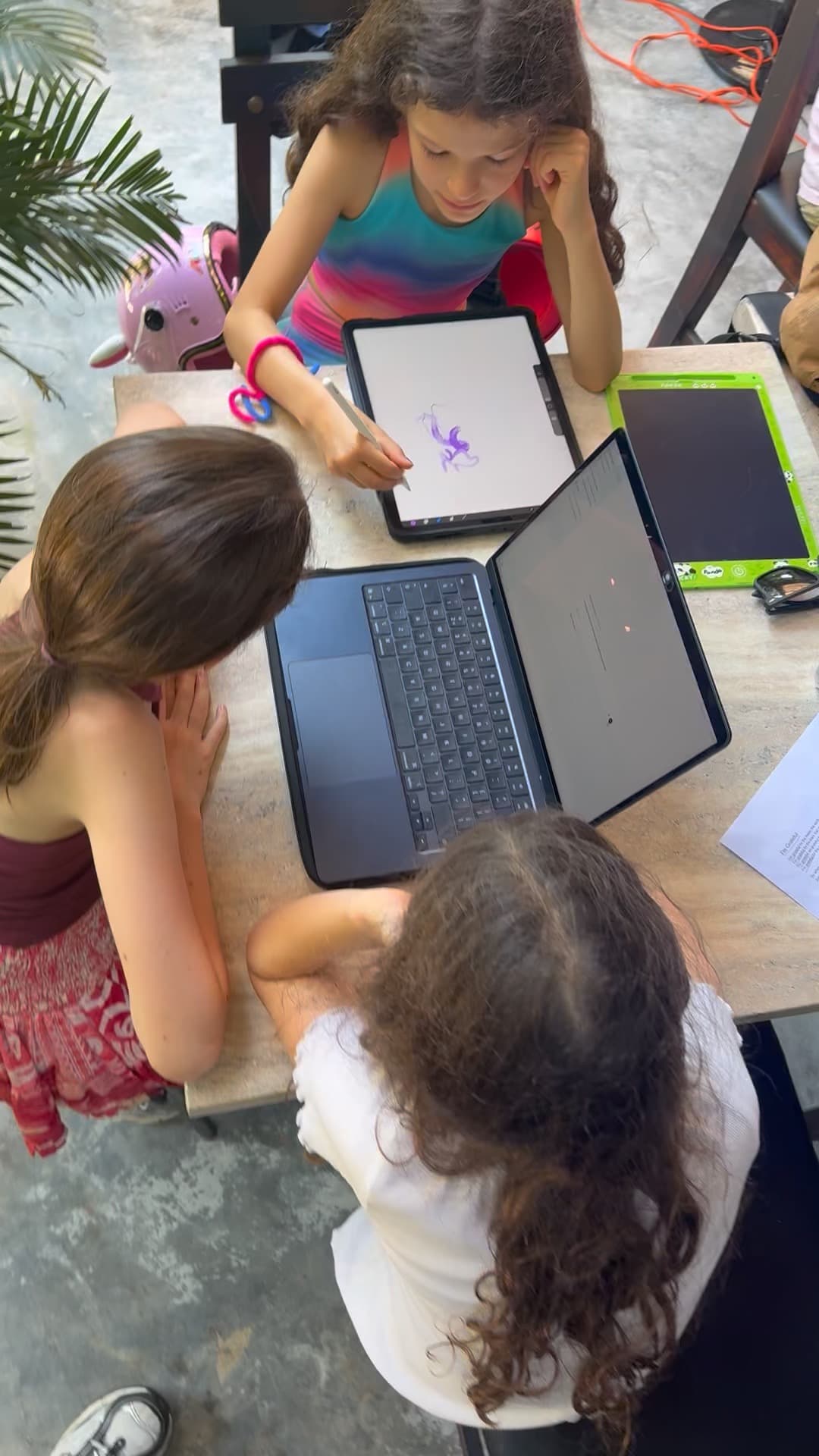
The real classroom opens. A market becomes arithmetic and vocabulary. A workshop with a maker becomes craft and patience. A temple, a tide pool, a bakery, a building site: children learn from real places and the people who work in them.
Afternoons: their own
Projects, free play, rest, and friends. Downtime is part of the design, not a gap in it. Evenings often end at a long shared table, because worldschooling families tend to find each other wherever they land.
Weeks have a rhythm too. Most families travel slowly, staying in one place for weeks or months, so the routine deepens instead of resetting. If you want to see how we shape days at an Edventures hub, our approach page walks through a real one, hour by hour.
The most common worry
You don't have to be the teacher.
Many parents hear "worldschooling" and picture themselves standing at a whiteboard, somehow teaching every subject on their own. That is not what it is. Worldschooling does not turn you into the schoolteacher.
The world does much of the teaching. So do real-world teachers, the hubs your family joins, the other families around you, and your child's own curiosity. Your job is closer to a guide who shapes good days and chooses good places. Plenty of worldschooling parents have never taught a class in their lives, and their children are doing beautifully.
The other big question
How do worldschooled children socialize?
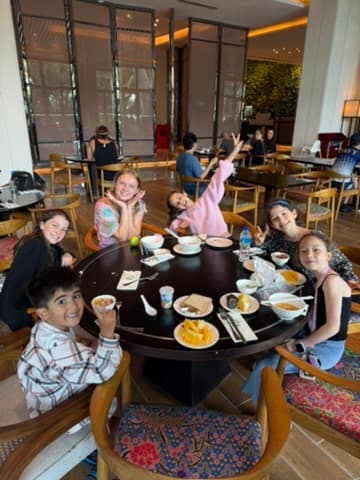
The honest answer: wonderfully, and it takes intention. Friendships do not happen automatically when your family is the only one at the museum on a Tuesday morning. Worldschooling families solve this the same way villages always have: by gathering. Hubs, cohorts, and communities exist in destinations around the world precisely so children land where friends are already waiting.
And the socialization worldschooled children get is unusually rich. Instead of spending every day with thirty children born the same year, they learn in mixed-age groups: helping younger children, learning from older ones, and talking easily with the adults who teach them a craft or share a meal. Many parents watch their children become more socially confident on the road, not less, because meeting new people becomes a practiced skill instead of a rare event. The intention part is where community comes in: knowing where other families gather, and planning to be there too.
Worldschooling vs homeschooling vs unschooling
The three words get tangled together, and families often blend all three. The short version:
Homeschooling
Parent-directed education based from home. It answers the question of who is in charge of the learning: the family, not an institution. The structure can be as formal or as relaxed as the family chooses.
Unschooling
Child-led, interest-driven learning with little or no imposed curriculum. It answers the question of who sets the direction: the child's own curiosity, with parents as facilitators rather than instructors.
Worldschooling
The world as the classroom. It answers the question of where and how the learning happens: through travel, real places, and real people. It can be structured, child-led, or (most often) a blend of both.
They are lenses, not competing camps, and most worldschooling families borrow from each. For the full picture, read our guide to worldschooling vs homeschooling vs unschooling.
Already homeschooling? You are closer than you think.
If your family already homeschools, worldschooling is not a new system to learn. It is your homeschool with the world added. The hard part, taking responsibility for your children's education, is the part you have already done. Travel simply changes where the learning happens.
Your approach comes with you. The curriculum, the read-alouds, the math sequence, the rhythm your children already trust: all of it travels. Most homeschooling families keep their morning foundations exactly as they are and let the afternoons open onto markets, workshops, and coastlines instead of the same four walls. Even the legal groundwork usually stays the same, since traveling families typically remain under their home jurisdiction's home-education rules.
When you are ready to see how the pieces fit on the road, our guide to homeschooling while traveling walks through it, from records to rhythm.
Who worldschooling is for (and who it isn't)
We would rather be honest than persuasive. Worldschooling is a wonderful fit for many families and a poor fit for some seasons of life, and knowing the difference saves a lot of second-guessing.
It tends to fit when
- Your work travels with you, or your calendar has real stretches of freedom: remote work, your own business, school holidays you want to use well.
- You are curious and willing to be intentional. Not expert, not certified. Curious.
- Your children light up around real things: making, asking, exploring, talking to people.
- You want community, not isolation, and you are open to finding your people along the way.
It may not be the season when
- One parent is genuinely not on board. Worldschooling built on a reluctant partner rarely holds.
- Your family is already at capacity: a new baby, a health challenge, a demanding transition. The world will still be there next year.
- A child deeply needs a specific support system that travels poorly right now. Their needs come first, always.
- You are hoping travel alone will do the teaching. It will not. Intention is the ingredient that makes it education.
Notice what is not on either list: being a teacher, being a full-time traveler, or having children of any particular age. Families start with a toddler on a hip and families start with a teenager who helps plan the route.
Already traveling with your children?
You might already be doing this without a name for it. A lot of families are learning through the world, and have no idea there are whole communities and programs built around exactly that. If your children are learning from the places you go, you are closer than you think. The next step is simply finding your people and a bit of structure to lean on.
A growing movement
How many families worldschool?
Nobody keeps an official register of worldschooling families, so honest answers come as ranges, not headlines. What we can count from our own directory research paints a clear picture: this is not a fringe experiment. It is a worldwide movement of families, and it is growing. Wherever your family lands, the odds are good that other worldschooling families have been there before you, and that some are there right now.
- countries with worldschooling hubs, programs, or communities in our directory
- 65+
- members across the worldschooling and home-education communities we follow
- 2 million+
- children learning at home in the U.S., part of a movement now reaching every continent
- 3.4 million
- worldschooling hubs, programs, and communities in our directory
- 240+
How families start worldschooling
Almost nobody starts by selling the house. The families who make it stick tend to follow the same three moves, in order, at whatever pace fits their life.
First
Learn what it involves
Understand the shapes it can take, the legal basics for your home country, and what a realistic day looks like. An afternoon of honest reading replaces months of vague worry.
Then
Find your people
Connect with families already doing it. Their honest answers about destinations, routines, and wobbles will teach you more than any brochure, and their children become your children's friends.
Finally
Try it, bounded
One trip with learning intention. One summer. One season at a hub or a program where the community is ready-made. A bounded experiment tells you more than a year of research, and commits you to nothing.
One practical note: worldschooling families usually operate under their home country's home-education rules, so the legal groundwork is the same as homeschooling. Requirements vary by country and state, and most are far simpler than families fear. Checking yours is an afternoon's work, not a life project.
When you are ready for the practical detail, our step-by-step guide to how to start worldschooling walks the whole path, and our programs page gathers vetted places to begin with other families around you.
Common questions
The things parents ask when they are first looking into it.
Worldschooling is an approach to education that uses travel and the real world as the classroom. Instead of learning only from a textbook in one room, children learn through the places they visit: markets, workshops, farms, museums, nature, and the people who live and work there. It can run alongside structured reading, math, and language. Families do it full-time, part-time during school holidays, or as a first experiment. It is a way of learning, not a long vacation.
No. This is the most common worry, and it rests on a misunderstanding. Worldschooling does not mean you become the schoolteacher. The world does much of the teaching, alongside hubs, real-world teachers, the community of other families, and your children's own curiosity. Your role is closer to a guide who designs good days and chooses good places, not someone delivering lessons at a whiteboard. Plenty of worldschooling parents are not teachers, and their children thrive.
They overlap, but they are not the same. Homeschooling is about where and how the learning is structured, usually based from home. Worldschooling adds travel and the wider world as the main source of learning. Many families blend the two, and many homeschoolers move toward worldschooling once they realize the world can carry a lot of the teaching.
No. Worldschooling comes in stages. Some families are full-time on the road, some travel during school holidays, and some are trying it for the first time with a single trip or a single summer. You can start small and keep your options open. There is no single right way to do it.
Quite possibly, yes. Many families are already learning through the world without knowing there is a word for it, or that whole communities are built around it. If your children are learning from the places you go and the people you meet, you are closer to worldschooling than you might think. The next step is simply finding your people.
It is the question every thoughtful parent asks. Worldschooling families keep reading, math, and language going in whatever way fits their child, and many find the real-world context makes those foundations stick better. Children also gain things a classroom rarely offers: independence, adaptability, and a genuinely global view. What matters most is being intentional, and you do not have to figure that out alone.
Start by learning what it actually involves, then connect with families already doing it. Edventures runs a free Worldschooling 101 class (in the works), a membership community of worldschooling families, and pop-up hubs where children learn together and parents find their footing. You can begin with a single trip or a single summer, no big leap required.
For many families, yes, and honestly, it depends on how it is done. Done with intention, worldschooling gives children things a classroom rarely can: real independence, adaptability, languages heard in context, friendships across ages and cultures, and a lived sense of how the world works. Done without intention, it can drift into sightseeing. The families whose children thrive keep foundations going, build community on purpose, and treat the world as a classroom rather than a backdrop.
Through community, and it takes a little intention. Worldschooling families gather in hubs, cohorts, and communities around the world, so children make friends quickly with other traveling children. They also spend real time with people of every age: local makers, mentors, younger children they help, older ones they learn from. Many parents find their children become more socially confident, not less, because they practice meeting new people all the time.
Yes, and the teen years can be when worldschooling matters most. Teenagers need real projects, mentors beyond their parents, a peer group, and a record of their learning, and all of those can travel. Programs built for older children and teens make it far easier, giving them a cohort and real work to do. Families keep portfolios and records as they go, so the path to college or work stays open.
Where to go next
Wherever you are in the journey, there is a gentle next step.
See how learning works
The day-to-day of an Edventures hub: balanced days, real-world teachers, structured foundations alongside hands-on projects.
Our approachFind your people
A community of worldschooling families swapping honest advice, comparing destinations, and figuring out the next move together.
The communityTry it in person
Pop-up hubs where children learn together and parents find their footing. A single summer is a real way to begin.
See the hubsTake it at your pace.
Get on our list for stories from the road, hub news, and a heads-up when the free Worldschooling 101 class is ready to watch. No pressure, no spam. Begin when the time is right.